Guides

The Ultimate Guide to Cold Spark Machine: History, Science, and Stage Applications

Table of Contents

Intro

For centuries, live entertainment relied on a dangerous, unpredictable, and highly regulated element to thrill audiences: Fireworks. From the court festivals of ancient monarchs to the stadium rock concerts of the late 20th century, traditional pyrotechnics were the undisputed kings of stage visual effects.
 
 However, they carried a  catch. The legacy of traditional stage fireworks is marred by tragic accidents, strict government bans, and rigid creative limitations.
 

Change happened in 2014. A breakthrough invention by Chinese engineer Zhou Xiaowen ( founder of SPARKFABRICA ) and his team in Liuyang—the historic birthplace of fireworks—shattered the status quo. By introducing the world’s first commercial Cold Spark Machine (commercially known as Sparkular).

inventor of cold spark machine

Zhou XiaoWen, Inventor of Cold Spark&Founder of SPARKFABRICA

This article offers a deep dive into the historical invention, complex physical configurations, and modern digital staging applications of the cold spark machine, providing a detailed analysis of how a localized mechanical innovation successfully pioneered an entirely new category within the stage special effects industry.

The Birth of Cold Spark Machine(2013-2015)

Through systematic research and repeated experimentation, Zhou Xiaowen and his team developed a completely new mechanized metal powder discharge system that achieves cold firework effects through a powder-free, electrically controlled drive in 2013. The core technical approach comprises the following aspects:

  • Feeding system: enables quantitative and uniform supply of metal powder, thereby resolving the issue of unstable performance caused by uneven fuel supply in conventional methods.
  • Heating system: The titanium metal alloy powder is heated via an electromagnetic coil to approximately 600 °C.
  • Airflow-driven delivery: Using an air delivery mechanism instead of propellant gas thrust to drive the steady flow of metal powder toward the ejection port.
  • Electrically controlled system: the spray height and duration are adjusted in real time via electronic control parameters; supports DMX512 protocol connectivity.

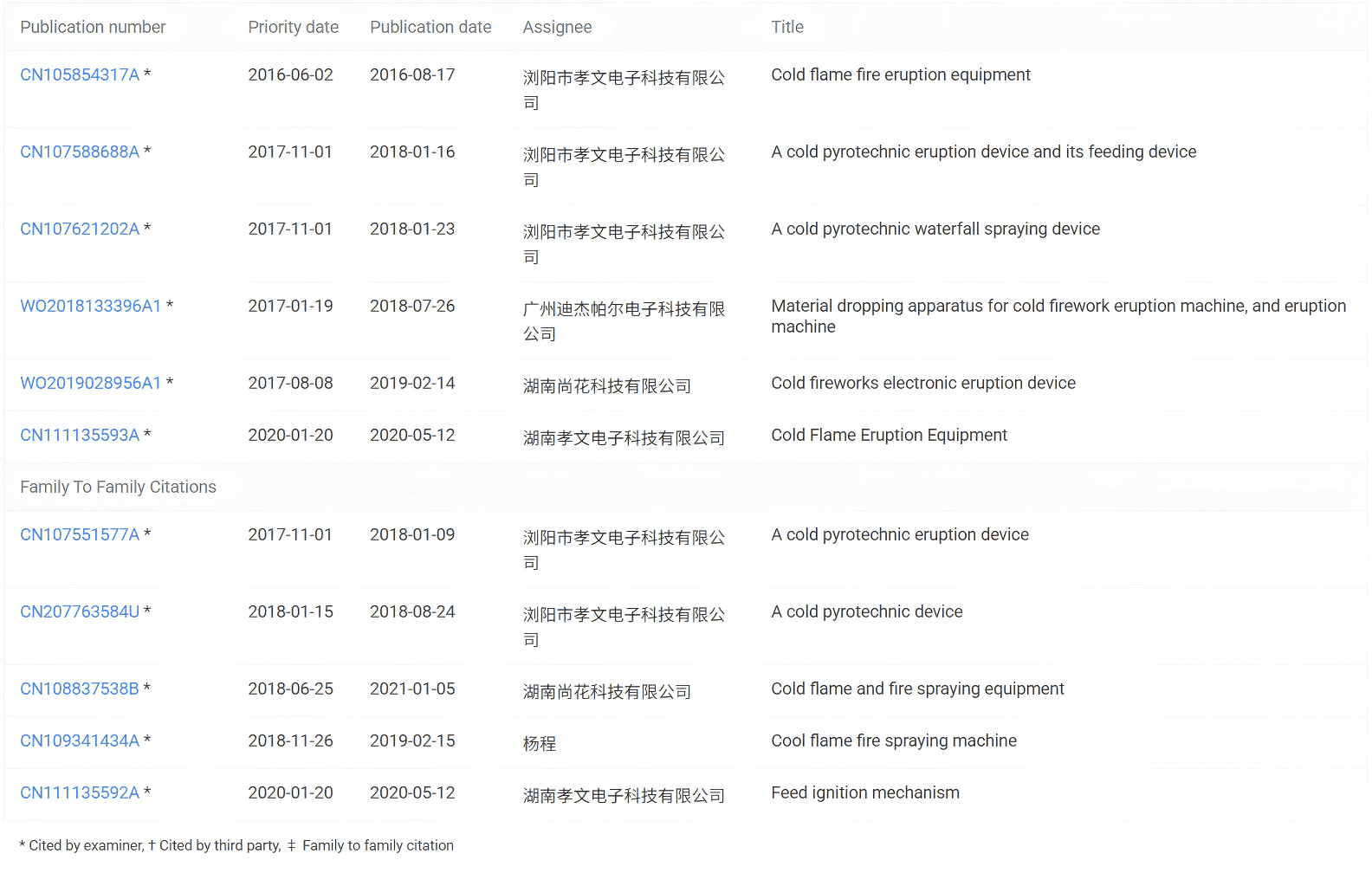
In 2014, the world’s first commercially viable cold pyrotechnic eruption device was completed, and in the same year, Zhou Xiaowen filed a patent application in his own name (see the link for patent details: “A cold pyrotechnic eruption device“). This marked the transition of fireless cold pyrotechnic equipment from concept to reality and pioneered an entirely new category in the stage special-effects industry.
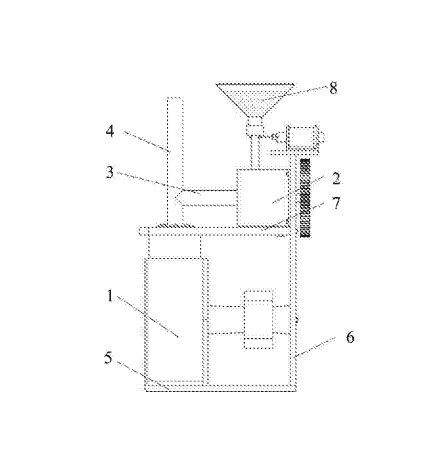
first cold spark patent picture

Conceptual cold spark via CN105371707A

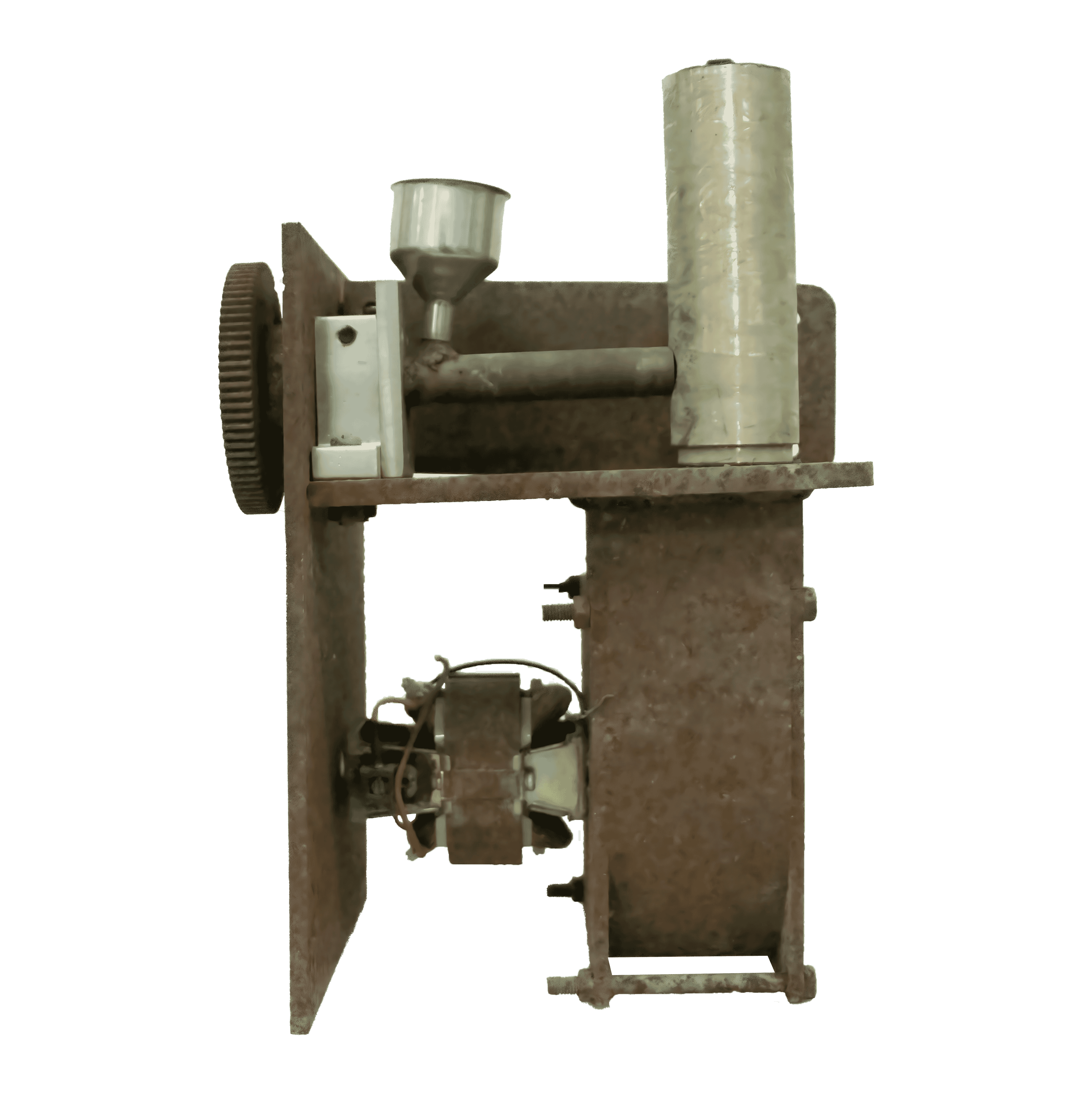
The world's first commercial electronic cold spark machine,2014,from sparkfabirca.

first cold spark machine in the world

In 2015, the world’s first mass-produced safe and environmentally friendly cold spark machine was launched, earning the gold award at the 4th Hunan Provincial Fireworks New Product Competition.

Subsequently, technologies related to cold spark machines were freely imitated and cited by the industry, such as by Showven/Djpower, which also highlights the foundational position and category pioneer status of SparkFabirca in the cold spark machine technology chain. Leveraging this patent, China’s special-effect equipment manufacturers gradually took the lead in the global supply of this category over the following decade.

The principle of cold spark machine

The Cold Spark Machine operates on the principle of using electromagnetic heating to raise specially formulated composite titanium powder to 560–620 °C; a high-speed airflow then ejects the incandescent metal particles into the air, where they undergo an oxidation reaction with oxygen, producing a silvery fountain effect. Integrated with a main control chip and a DMX512 signal interface, the system supports multi-unit linked programming and enables precise control over the timing, duration, and rhythm of the eruptions, making it widely applicable for stage events.

the use of “cold spark” machines in front of a proximate audience need pyrotechnic display permits or license?

In general, cold spark machine can be define as “Pyrotechnic Device Effect Simulation Equipment” which means equipment that uses a chemical mixture, heat source, and the introduction of oxygen to initiate or maintain combustion and is used to produce visible or audible effects by combustion, deflagration, or detonation. Therefore, the use of “cold spark” machines in front of a proximate audience would require pyrotechnic display permits and license by local fire prevention bureau. For specific application details, please consult your local fire department.

Different names or titles for spark machine

Unlike “flamer,” Stage professionals use a consistent term, which avoids ambiguity; by contrast, “spark machine” has a wide variety of names. In fact, “cold pyrotechnic eruption device” and “Cold Flame Eruption Equipment” are both academic terms used to distinguish the product from traditional cold-light fireworks. “Sparkluar” is merely a trademark for a spark machine; it is not a generic term for the product category. Once the product became widely popular, the name was simplified to “cold spark machine.” In my view, just as with “flamer,” simplifying the term to “spark“or “spark machine” may make it more accessible and easier to understand.

The types of Spark Machine

With the maturation and widespread adoption of floral spray machine technology, a growing variety of cold spark machines with different designs and height effects has emerged. Based on weatherproofing characteristics, sparks can be classified as weatherproof or non-weatherproof.Based on the power supply, they can be classified as battery-powered and non-battery-powered models; based on the number of spray nozzles, they can be categorized as single-nozzle, dual-nozzle, or multi-nozzle models; based on the spray angle, they can be divided into models with a fixed vertical angle and models with an adjustable swivel angle; based on the effect height, they can be classified as 1–3 m, 3–5 m, 3–8 m, or 5–10 m; and based on the type of spark effect, they can be divided into bouquet-style models, gerb-style models.
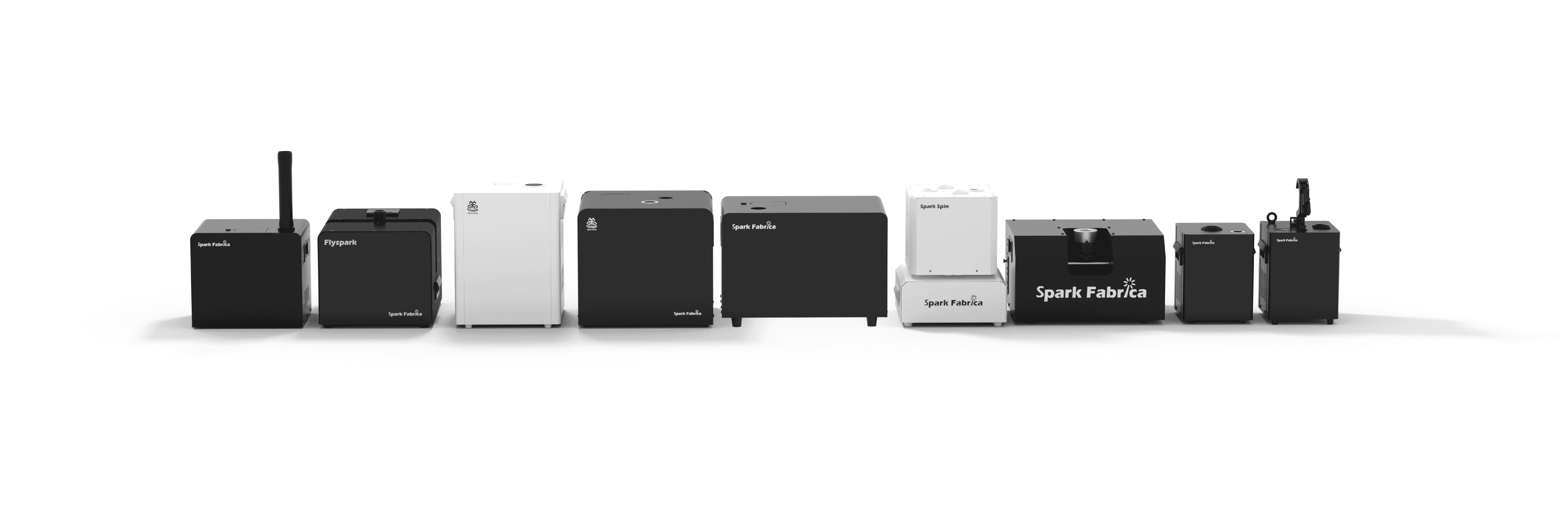
spark machines ally1

how to choose Spark Machine

Based on the classification of spark machines provided above and considering that different spark machines are suitable for different application scenarios, we use SparkFabrica‘s spark machines as an example. For guidance on selecting the appropriate flower-spraying machine product, please refer to the table below:
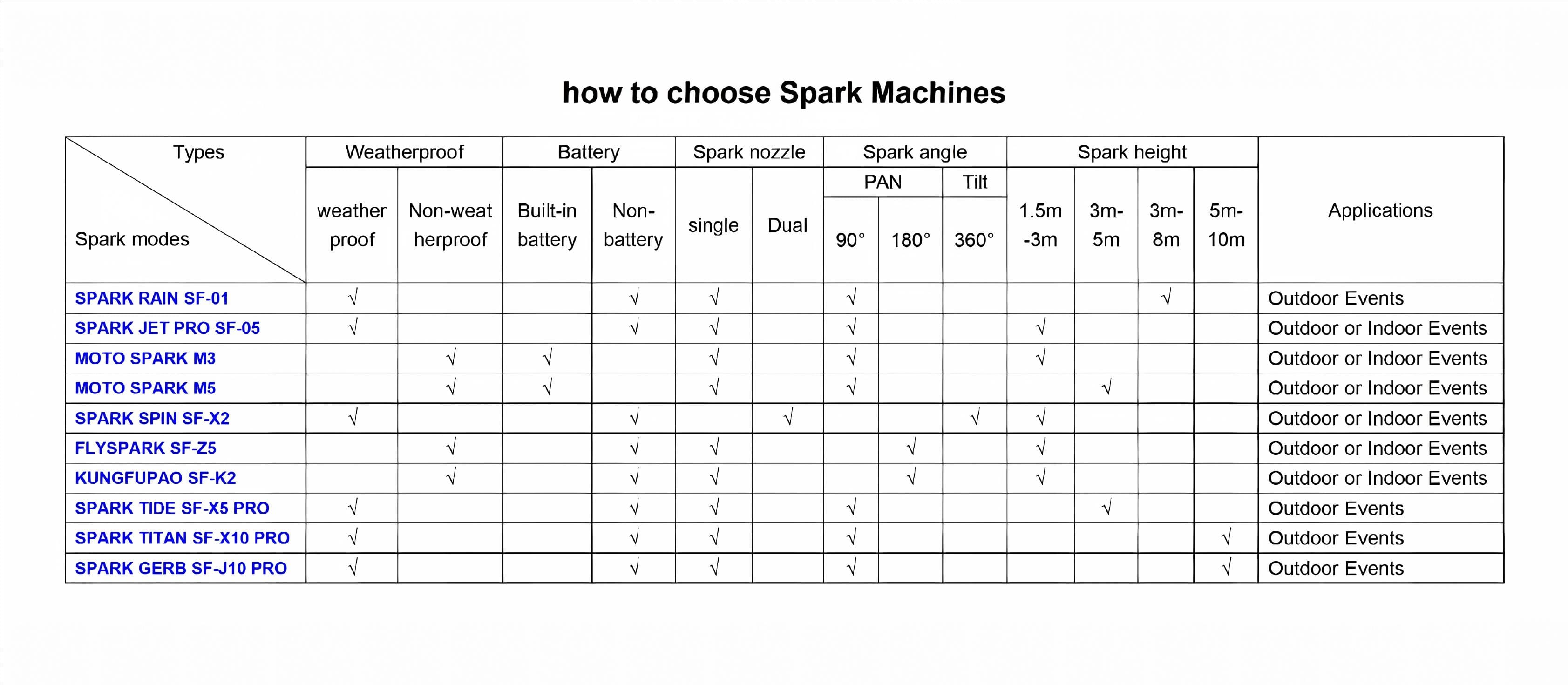
Spark Types 011

Usage Risks & Safety cautions

Whether you are a stage professional or a non-professional, the risks and safety precautions associated with the use of this Spark Machine should be reviewed and followed:

  • Strictly maintain a safe distance to prevent high-temperature burns and fires. The term “cold spark” does not mean that the temperature of a spark is low enough to be absolutely safe. In fact, the heating elements inside the machine heat the titanium metal powder to approximately 600 °C and blow it into the air; the powder immediately adjacent to the spray nozzle can reach temperatures of around 500 °C. As the pressure head decreases, the temperature cools rapidly to around 30 °C; this cooling is not linear. Generally, a distance of approximately 1.5 meters from the spray nozzle represents the minimum safe distance at which human skin will not suffer burns. If qualified titanium metal powder is used and there are no flammable materials—such as combustible curtains or carpets—within a 2-meter radius of the spark machine, the risk of fire is extremely low; conversely, the use of substandard titanium metal powder for spark machines is the primary source of fire risk. This is because inferior spark powder contains numerous ineffective impurities, has uneven particle size, and is prone to clumping when exposed to moisture; consequently, the mixture formed by particles that have been heated to high temperatures tends to drop down, leading to personnel burns or the ignition of surrounding flammable materials.
  • Tipping & Accidental Sparking. During operation, if the unit is not placed on a flat, stable floor or a dedicated support, if anti-tip fixation is not properly implemented, or anti-tip mode is disabled, or the anti-tip mode malfunctions, sparks may be ejected laterally and cause injury; additionally, interference from on-site intercoms or other signals may cause the wireless remote control to trigger incorrectly, or the DMX console may be triggered inadvertently by operator error. Therefore, the spark machine must be secured and leveled during use, and the wireless frequency band should be tested in advance to avoid interference sources; during periods when no jetting is occurring, the remote control switch should be turned off, or the DMX console pushers should be reset to zero and lock the console.
  • Avoid overloading electrical equipment: the power of a single spark machine typically ranges from 480 W to 1,800 W. When multiple machines are connected in parallel, the calculation should take into account both the maximum power that the wiring can carry and the number of parallel units. For example, at an AC 220 V voltage, when using 2.5 mm² 3-pin wiring to connect four 480 W spray machines in parallel, the safest number of parallel machines is calculated as follows: 5.75 kW / 480 W = 12 units.
  • Avoid prolonged heating. During performances or rehearsals, if the spark machine has not been sprayed for an extended period, it should be cleared to prevent the titanium powder from undergoing localized softening or sintering and bonding under sustained high temperatures in the heating chamber. Clumped titanium powder can directly jam the feeding screw or block the nozzle, causing the equipment to fail to discharge powder and resulting in motor overload and burnout. During performances, special effects technicians should preheat the equipment according to the heating time specified for each machine (typically approximately 3 min to 9 min); do not activate the equipment’s preheating function too early. If the interval between programs exceeds half an hour, the heating switch should be turned off, and heating should be restarted only 10 minutes before the spark; the spark machine should not remain in a prolonged heating standby state continuously. After each use, be sure to run the “Clear” function to completely discharge any residual powder from the powder tank and heating tube, preventing residual powder from being baked by remaining heat and causing material blockage upon the next startup.

What consumables are used in spark machine? How to distinguish spark powder quality ?

The professional name for Spark powder is composite titanium powder for stage effect; it is a specialized consumable for cold spark machines. It is primarily made from high-purity metallic titanium (Ti) as the base material, which is combined with trace metallic elements such as zirconium (Zr) in a specific ratio to produce an alloy powder. Authorized manufacturers (such as Spark powder from SparkFabrica) can provide an MSDS (Safety Data Sheet) and a non-hazardous chemical transport identification report; inexpensive, unlabeled, “unmarked” bulk powder often contains silica sand and is highly prone to posing safety hazards.

The fundamental difference between high-quality and low-quality composite titanium powder lies in alloy purity and particle uniformity; these factors directly determine the safety of the spraying process, the visual effect, and the service life of the core heating components of the spark machine. The impact of using low-quality stage-decor composite titanium powder would result in:

  • The particle sizes are inconsistent; the material is prone to absorbing moisture and clumping, and it can very easily jam the powder feeding screw rod, causing the machine to trigger an alarm or the motor to burn out.
  • The sparks appear dim and reddish, with sparse flickering; the spray height fluctuates unpredictably; “flicker” occurs frequently; and the stage’s visual effect is compromised.
  • Coking and carbon deposition readily occur on the inner walls of the heating tubes and nozzles, forming hard molten slag; this can cause the machine’s nozzles to become clogged, lead to premature failure of the heating assembly, and result in high repair costs.
  • The presence of substantial black residue or hard particles significantly increases the risk of cleaning and compensation liabilities for hotel carpets or stage flooring.

Unless a spectrum tester is used, even professionals with the naked eye can hardly distinguish the quality of Spark Powder. Tips for Quickly Assessing the Quality of Spark Powder:
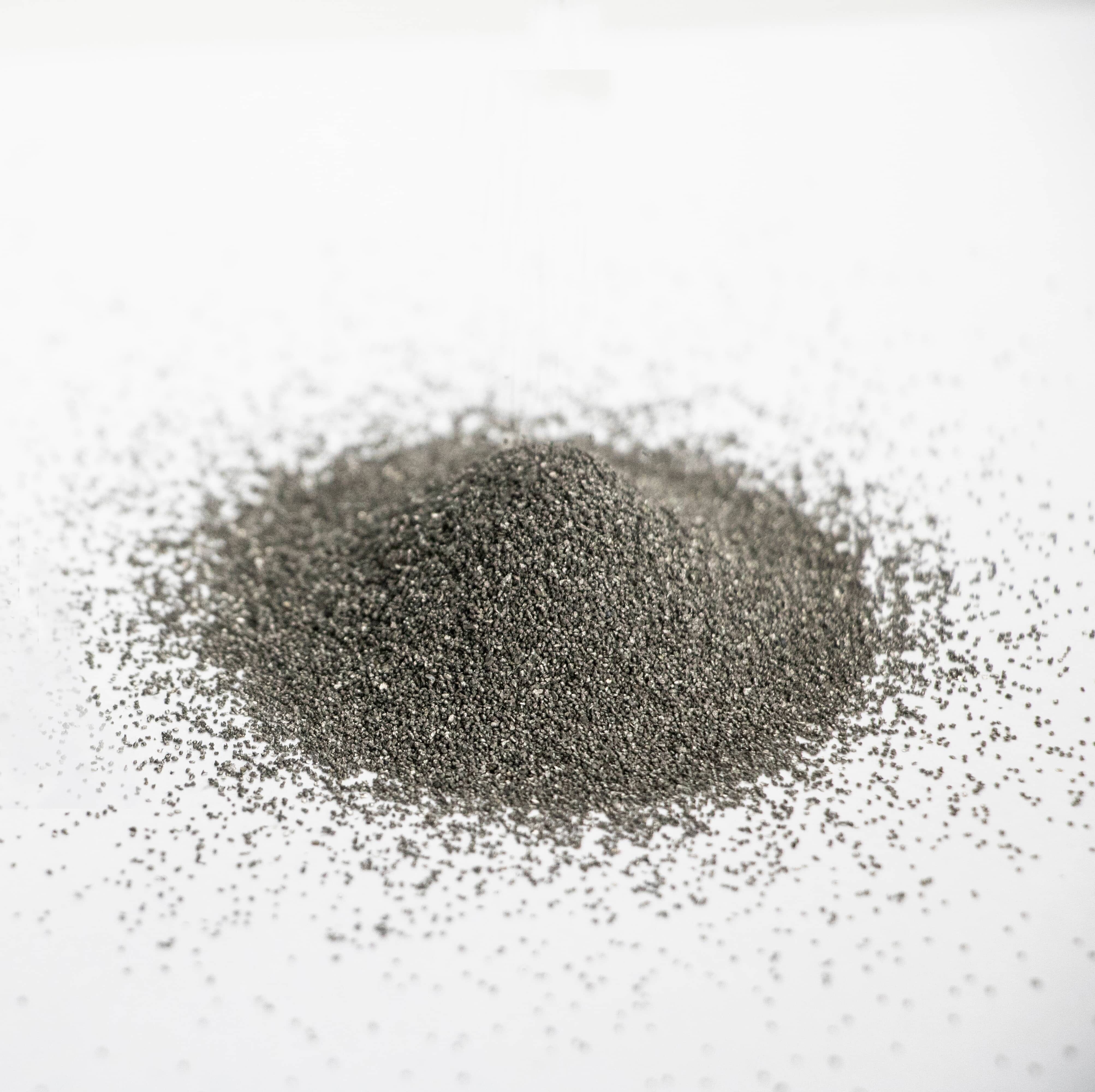
  • Price: Spark powder priced below $18 per 200 g/bag is typically a low-quality consumable.
  • Spark Appearance: The sparks are bright golden-white or silver-white in color; the columns are full and straight, with stable height that does not diminish over time. There is a relatively high occurrence of upward-extending spark formations above the cluster; no particles fall off, or very few do.

How to Choose the Size of Spark Powder ?

Generally, Spark Powder sizes are classified into M, L, XL, and XXL based on the particle mesh size; the specific size depends on the power of the Spark Machine and the spark height.

Powder TypeHeightWeightPackageSupport Models
Medium (Indoor Use)Up to 3.5 Meter200g/bag20bags/BoxSF-01/SF-05/SF-K2/M3/M5/SF-X5
Large (Outdoor Use)Up to 5 MeterSF-01/SF-05/M3/M5/SF-X5/J10
X Large (Outdoor Use)Up to 10 MeterSF-X10

The Rank of Global Cold Spark Manufactures

RankManufacturer / BrandIndustry RoleTechnology & R&D CapabilitiesProduct Line DepthManufacturing Experience(Years)
1SparkFabricaOriginal/Pioneer★★★★★★★★★★Since 2014
2ShowvenFollower★★★★☆★★★★☆Since 2016
3DJpowerImitator★★★☆☆★★★☆☆Since 2019
otherOther FX manufacturers in GuanzhouKnockoff Maker/Counterfeiter★☆☆☆☆★☆☆☆☆
sparkfabrica logo